UK, IE, AU, NZ, ZA
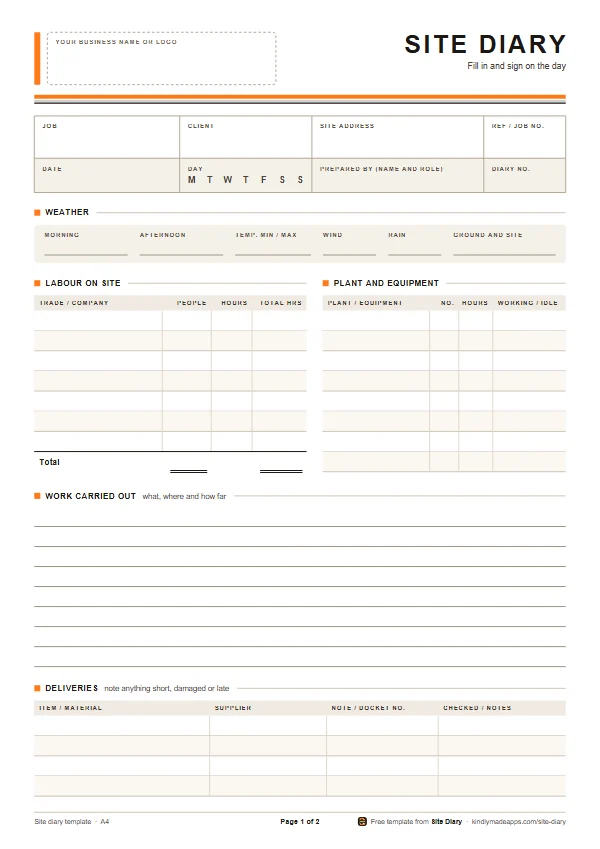
Site diary template
The day’s record: labour, plant, deliveries, delays, visitors, safety and photos.
Free printable form
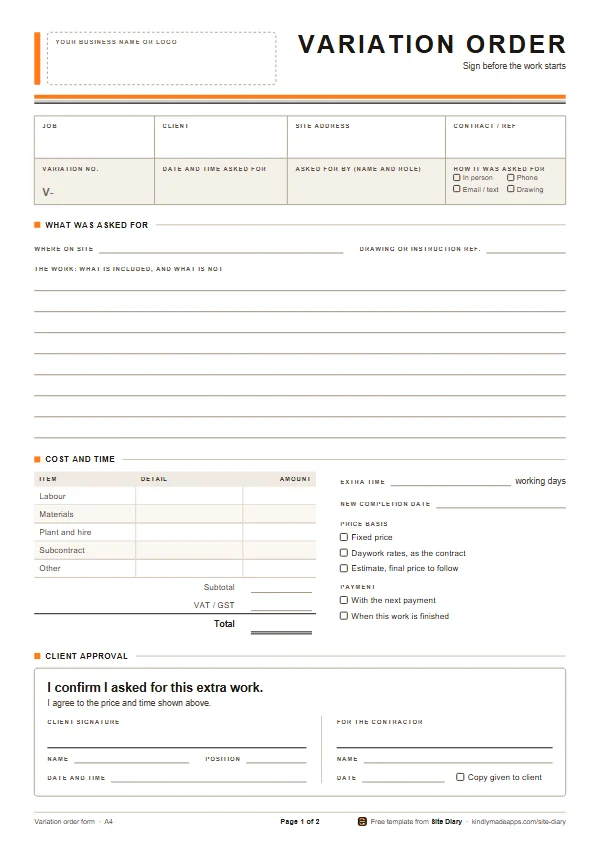
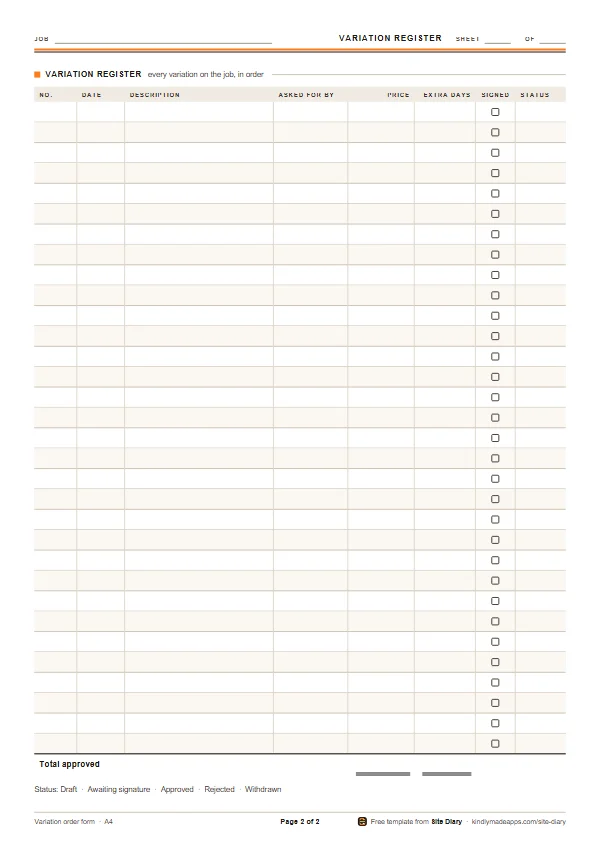
A one-page form to get extra work priced, agreed and signed before you start, with a variation register on page 2 to keep track of every variation on the job.
Worded for the UK, Ireland, Australia, New Zealand and South Africa. Working in the US or Canada? Use the change order form.
Last updated
What’s on it
Page 1 is the whole agreement: what, where, how much, how long, and the client’s signature. Page 2 keeps every variation on the job in one list.
A variation is any change to the work in your contract: extra work, less work or different work. (In the US and Canada it is called a change order.) A variation order is the document that records the change and the client’s agreement to it.
“While you’re here, can you just…” is how most unpaid work starts. A signed variation order:
The client, Priya, asks on site for an extra double socket on the kitchen island. Filled in, the variation order says:
Priya signs under “I confirm I asked for this extra work.” You sign too, and she has a copy before anyone picks up a tool. It takes two minutes, and it ends the argument before it starts.
Your contract’s change procedure comes first: who can order a change, how it must be given, and how quickly you must give notice of its cost and time.
General guidance, not legal advice. Check your contract.
Paper or phone?
Site Diary turns a variation into a one-minute job on site:
Coming soon to Google Play
Free for your first 2 months, no card needed.

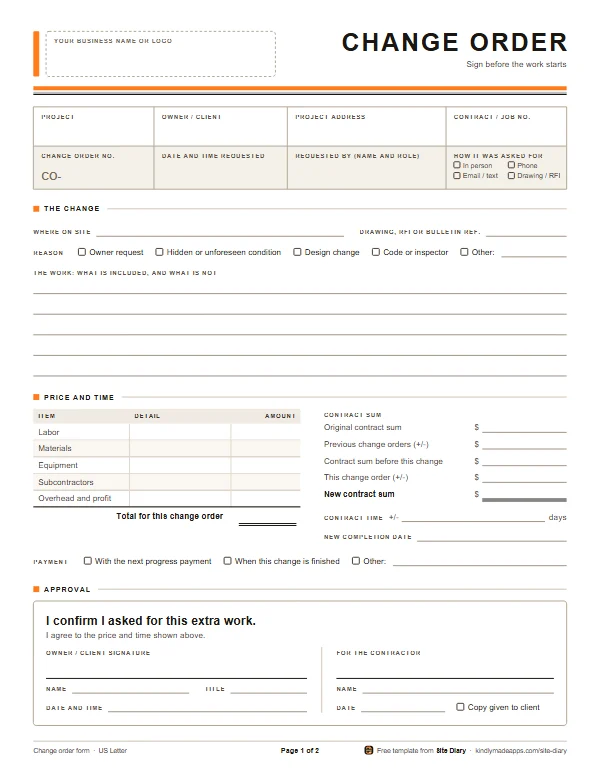
The variation is the change to the work itself. The variation order is the written record that it was asked for and agreed. Some contracts call it an instruction or a contract instruction, and in the US and Canada it is a change order.
It is the safest way to work, and on home building it can be the law: in several Australian states, including New South Wales, Victoria and Queensland, variations to home building work have to be put in writing and agreed before the work goes ahead. Otherwise, follow the change procedure in your contract.
Don’t start the extra work unless your contract says you must. Write down what was asked for in your site diary, confirm it by email or text the same day, and say you will start once the variation is signed. If the contract lets the architect or contract administrator order changes with the price agreed later, keep daily records of the labour, plant and materials the change uses.
Sometimes, but it is much harder. You will need other evidence that the client asked for the work and accepted it, such as messages, diary entries and photos, and some home building laws limit what a builder can recover without a written variation. Take advice if a lot of money is at stake.
Labour, materials, plant and hire, subcontractors and any other costs, plus your overheads and profit, and VAT or GST if you charge it. Add the extra time too, because a change that takes three more days can push back everything after it.
You can, but the change order form uses the words owners there expect: change order, owner and contract sum, with US Letter first.
UK, IE, AU, NZ, ZA
The day’s record: labour, plant, deliveries, delays, visitors, safety and photos.